

The Other Driver Was on a Phone: What Should I Do After a Crash?
If the other driver was texting, scrolling, holding a phone, using GPS, or looking down before the crash, you may have a distracted-driving case.
But you may also have a problem:
The evidence can disappear fast.

Phone records, app activity, vehicle infotainment data, dashcam footage, and witness memories may all fade or be lost quickly. That is why the first days after a distracted-driving crash matter.
Pennsylvania’s hands-free driving law, known as Paul Miller’s Law, became effective June 5, 2025, and bans use of hand-held devices while driving. New Jersey also prohibits drivers from using handheld wireless telephones or electronic communication devices while operating a moving vehicle unless used hands-free.
If you were hurt in a crash in Pennsylvania or New Jersey, Edelstein Law’s Motor Vehicle Accidents page is the best place to start. Edelstein Law represents injury victims throughout PA and NJ and handles serious motor vehicle accident claims.
What evidence can prove the other driver was distracted?
A driver may deny phone use after a crash. That does not end the inquiry.
Evidence may include:
witness statements,
police observations,
phone records,
text-message timing,
call logs,
app activity,
GPS or navigation activity,
dashcam footage,
vehicle infotainment data,
Bluetooth connection history,
delivery or rideshare app status,
employer dispatch messages, and
surveillance from nearby businesses.
In serious crashes, the question is not only whether the driver had a phone. The question is whether the driver was using it at the moment attention should have been on the road.
What should you do in the first 72 hours?
1. Get medical care
Do not wait to “see how you feel.” Some injuries, including concussion symptoms, neck/back injuries, and soft-tissue injuries, can worsen after the adrenaline wears off.
2. Preserve photos and videos

Save:
vehicle damage photos,
roadway photos,
skid marks or lack of braking evidence,
traffic-light or intersection layout,
weather and lighting conditions,
dashcam footage, and
photos showing where the vehicles came to rest.
3. Identify witnesses
Ask witnesses whether they saw the driver:
holding a phone,
looking down,
drifting before impact,
failing to brake,
using GPS or an app, or
admitting distraction after the crash.
4. Save everything from your own phone
Preserve:
crash photos,
text messages about the crash,
location history if relevant,
calls to 911,
ride-share or navigation data, and
insurance communications.
5. Do not rely on the insurance company to preserve evidence
Insurance companies may request basic documents, but they do not necessarily preserve the defendant’s phone, app data, infotainment logs, or vehicle systems.
That is why contacting counsel early can matter.
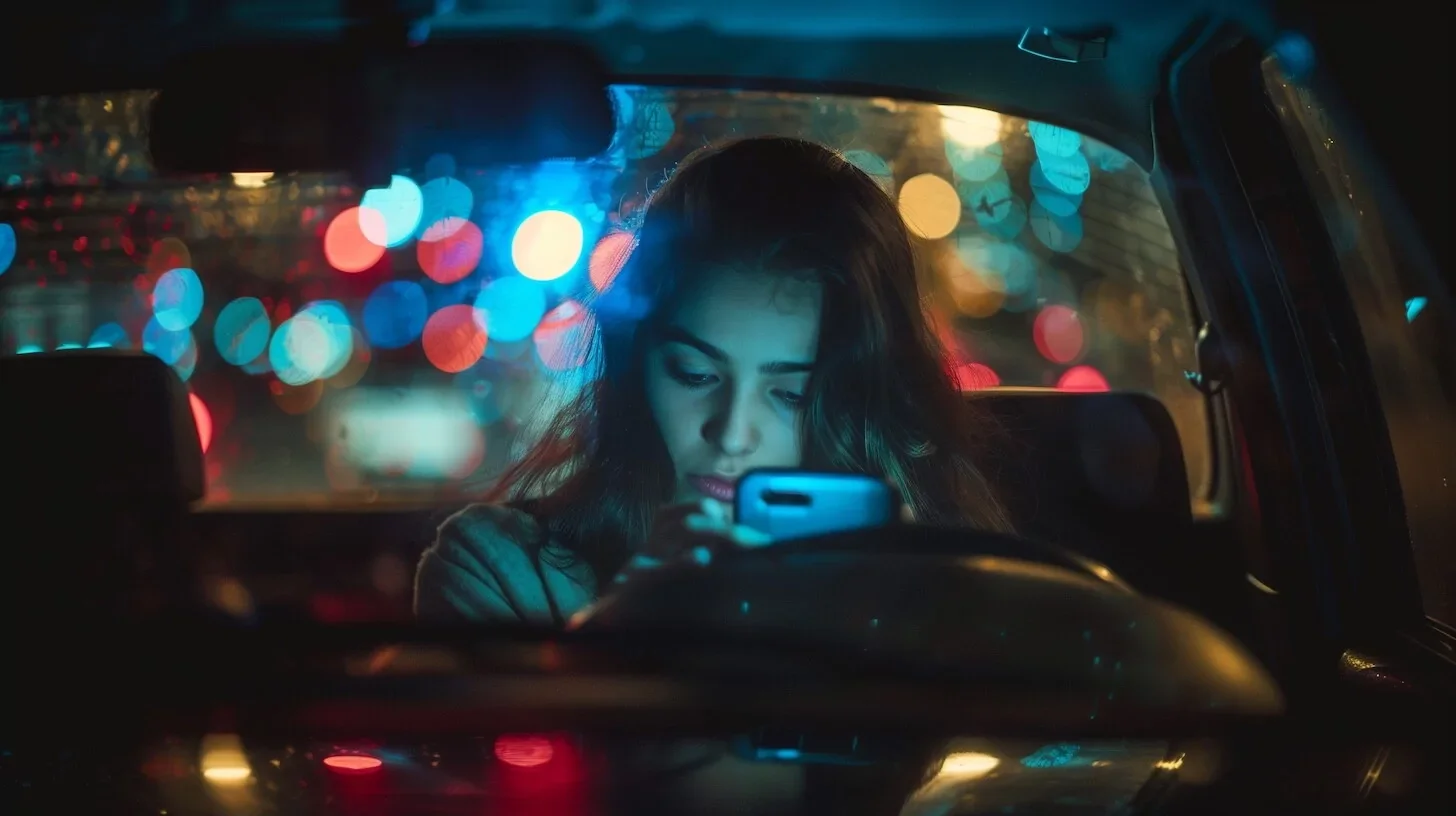
Why phone evidence must be preserved quickly
Phone and app data can be deleted. Vehicle data may be overwritten. Dashcam footage may loop. Business surveillance may disappear within days.
A preservation letter can demand that the other driver, employer, fleet company, ride-share, delivery platform, or insurer preserve relevant evidence.
That may include:
the phone itself,
phone records,
app activity,
location history,
vehicle infotainment data,
dashcam footage,
telematics,
dispatch records, and
employer communications.
The longer you wait, the harder this evidence may be to recover.
What if the distracted driver was working?
If the other driver was working, the case may involve more than one defendant.
That can include:
employer liability,
company vehicle policies,
delivery or rideshare platform activity,
dispatch communications,
driver training failures, and
negligent hiring or supervision.
This is especially important in crashes involving delivery vehicles, trucks, work vans, rideshare drivers, or employees using phones for work.
Distracted Driving Accident FAQs
-
Not automatically, but it can be strong evidence. The key question is whether the phone use contributed to the crash.
-
That does not end the case. Phone records, witness testimony, infotainment data, app activity, and surveillance may still prove distraction.
-
Usually no. These records often require legal process, preservation demands, subpoenas, or discovery.
-
That may raise preservation or spoliation issues depending on when the driver knew evidence should be preserved.
-
As soon as possible if you suspect distracted driving. Evidence can disappear quickly.
Distracted Driving Accident Lawyers at Edelstein Law
If you believe the other driver was on a phone before a crash in Pennsylvania or New Jersey, do not wait for the insurance company to investigate it for you.
Edelstein Law handles serious motor vehicle accident claims across PA and NJ and can help evaluate whether phone use, app activity, vehicle data, or employer evidence may strengthen your case.