



Philadelphia SEPTA Accident Lawyers (PA & NJ)
Injuries involving SEPTA buses, trolleys, trains, platforms, stations, escalators, and public transit property require fast evidence preservation and a strategy built for sovereign-immunity issues—not ordinary negligence assumptions.
'No fee unless we win → Confidential intake →Serving riders and families across Philadelphia, Southeastern Pennsylvania, and surrounding communities.
Support Note: If your injury involved SEPTA, act quickly. Video, operator reports, dispatch records, and station documentation can disappear fast. SEPTA’s own customer service page lists a Claims number and incident reporting channels, and SEPTA’s safety page lists emergency and police reporting options.

Why SEPTA cases are different
SEPTA cases are not handled like ordinary car crash or slip-and-fall claims. Pennsylvania courts have long treated SEPTA as a Commonwealth agency and Commonwealth party, which means claims are generally filtered through the Sovereign Immunity Act and its specific statutory exceptions. Courts have repeatedly emphasized that those exceptions are narrowly construed.
That matters because the legal question is not only whether negligence occurred. It is also whether the facts fit within a recognized exception that allows the claim to proceed. In practical terms, SEPTA cases often turn on:
whether the harm arose from vehicle operation,
whether it involved personal property in SEPTA’s care, custody, or control,
whether a dangerous condition of Commonwealth real estate is truly implicated, and
whether notice and timing requirements were handled correctly

Common SEPTA accident cases we evaluate
-
![Damaged red car with crumpled front end and debris, other vehicles and city buildings in the blurred background.]()
Bus Accidents
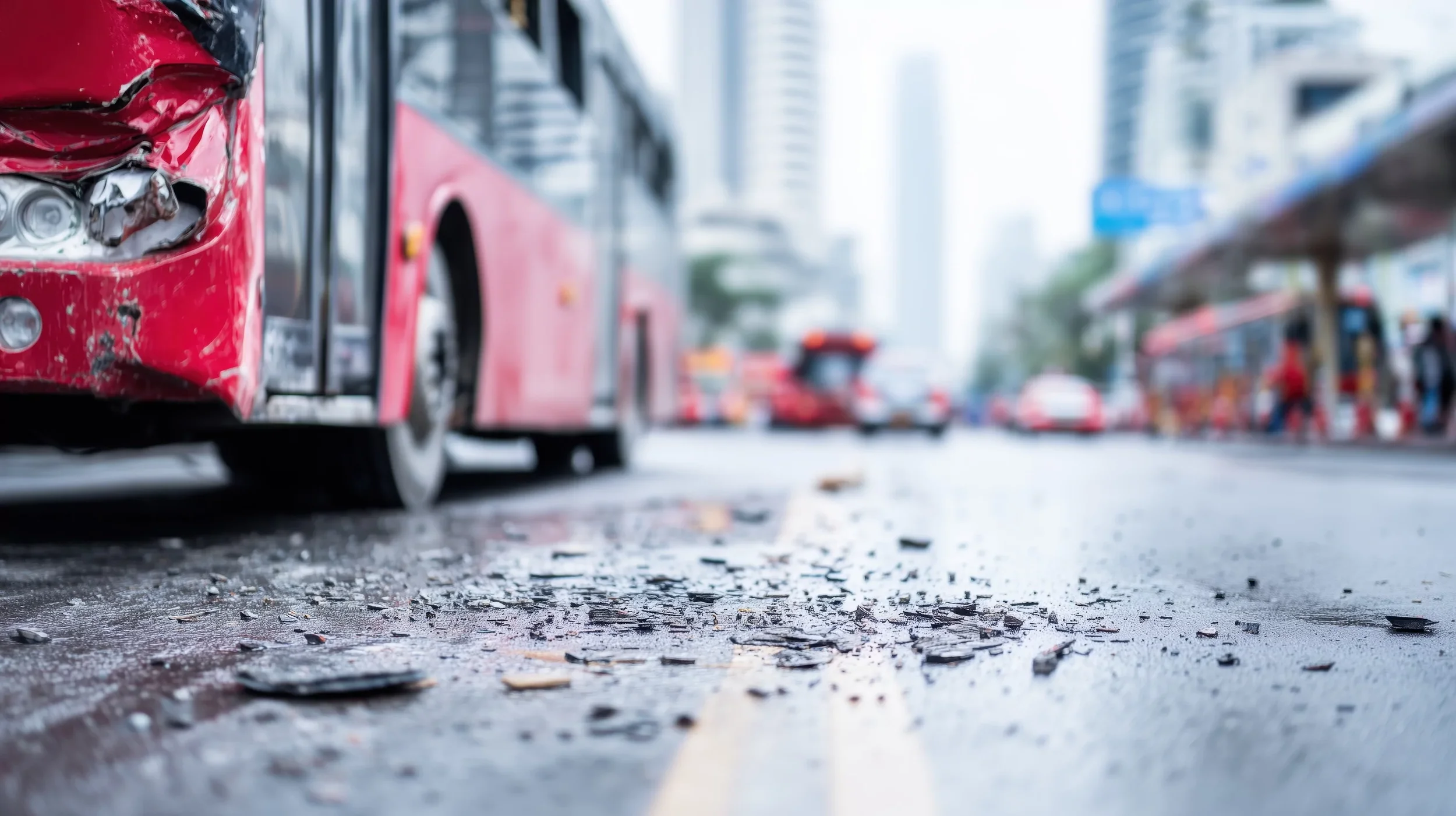
SEPTA bus collisions, hard stops, boarding and alighting incidents, pedestrian strikes, and operator-negligence cases often raise the vehicle-liability exception. Pennsylvania’s statute defines “motor vehicle” broadly to include self-propelled vehicles and specifically includes vehicles operated by rail, through water, or in the air.
-
![A derailed train lying on the tracks with visible damage and debris around it.]()
Trolley & Train Accidents
Regional Rail, subway, trolley, and railcar incidents can involve operator negligence, track, door issues, or dangerous movement of transit vehicles. Rail operations matter because the statute’s vehicle-liability definition expressly includes rail-operated vehicles.
-
![Man in black suit and brown leather shoes standing in a puddle on a train station platform, with spilled liquid on the ground and a train approaching in the background.]()
Platform & Station Falls
Platform and station cases can be legally harder. Pennsylvania’s Supreme Court held in Jones v. SEPTA that a slip on rock salt on a train platform did not fall within the real-estate exception as argued in that case, underscoring how narrowly these claims are evaluated.
-
![A group of people crowded inside an elevator, with a young woman with shoulder-length dark hair and a floral shirt in the center looking upward, surrounded by others with serious expressions.]()
Escalator & Elevator Injuries
These claims may involve SEPTA property, maintenance contractors, or component issues, depending on facts. Preservation of maintenance records, inspection logs, and equipment history is often central.
-
![A woman in a black long sleeve shirt is standing at a subway station with her hands on her lower back, appearing to experience back pain, with subway tracks and passengers in the background.]()
Passenger Injuries While Boarding or Exiting
These cases often involve doors, steps, handholds, operator movement, or the care, custody, and control of SEPTA personal property. Commonwealth Court decisions show how carefully these exceptions are litigated.
-
![Close-up of a handgun barrel lying on a light-colored surface, with colorful fabric and a denim cloth in the background.]()
Negligent Security or Assault-related Claims
If the injury arose from violence or criminal conduct on SEPTA property, the legal analysis can be especially difficult because SEPTA immunity issues and foreseeability questions often become central very quickly.



What to do after a SEPTA accident
If you were injured on a SEPTA bus, trolley, train, platform, station, or escalator, these steps help protect both your health and your claim:
Get medical care first.
Write down the details immediately: route number, line, station, direction of travel, vehicle number, operator description, exact time, and where it happened.
Photograph the scene if you safely can.
Get witness names and contact information.
Preserve fare card, app records, or trip confirmation details if relevant.
Report the incident through SEPTA’s channels when appropriate and keep confirmation details. SEPTA’s customer service page says riders can use its comment form and incident reporting tools, and lists Claims: 215-580-3700. SEPTA’s safety page lists SEPTA Transit Police emergency phone 215-580-8111 and text-a-tip 215-234-1911.
Do not assume the footage will be saved unless you or your counsel demand preservation.
Evidence that matters in SEPTA cases
This is one reason SEPTA cases should be reviewed early. The question is not just “who was negligent?” It is often “what evidence will still exist by the time we ask for it?”
SEPTA cases are won on documentation and preservation. Key evidence often includes:
operator incident reports
internal SEPTA incident or safety reports
vehicle and station surveillance footage
SEPTA police or transit police records
dispatch and call logs
witness statements
photographs of platform, vehicle, gap, lighting, stairs, or escalator
maintenance and inspection records
medical records and treatment timeline

Notice requirements and timing can be serious
Pennsylvania law requires that, within six months from the date of injury or accrual, a person intending to bring a civil action against a government unit must file a written statement containing specified information, and if the action is against a Commonwealth agency, notice must also be filed in the Office of the Attorney General. If the required statement is not filed, the action can be dismissed unless the court excuses the failure for a reasonable excuse.
That does not mean every SEPTA case automatically dies at six months. It does mean that waiting is dangerous and the notice issue must be evaluated immediately in any serious SEPTA injury matter.


Damages caps may apply
For actions against Commonwealth parties covered by Pennsylvania’s sovereign-immunity subchapter, damages are generally capped at $250,000 in favor of any plaintiff and $1,000,000 in the aggregate arising from the same occurrence or series of occurrences. The statute also limits the categories of recoverable damages.
This is one of the reasons SEPTA cases require a different strategy than ordinary private-party negligence cases.

Local Philadelphia transit realities
SEPTA cases are deeply local. They often involve:
Market-Frankford Line and Broad Street Line platforms,
Center City transfer stations,
Regional Rail boarding and alighting issues,
bus incidents on crowded city routes,
station stairs, platforms, and escalators with heavy foot traffic, and
video systems, call boxes, and internal reporting structures unique to SEPTA.
For Philadelphia and Southeastern Pennsylvania riders, the practical issue is not just getting “the police report.” It is identifying which agency responded, what SEPTA internally documented, whether SEPTA Transit Police were involved, and whether any customer-service, incident, or safety report exists. SEPTA’s customer service page expressly directs riders to customer service, comment forms, incident reporting, and claims channels, while SEPTA’s safety page directs emergencies to SEPTA Transit Police or 911.
If the incident occurred in a Philadelphia station or on a SEPTA vehicle, that local record trail can make or break the case.

-
SEPTA’s customer service page lists:
customer service phone support,
a comment form,
an incident reporting option,
and a specific Claims: 215-580-3700 contact.
-
SEPTA’s safety page lists:
Emergency: 911 or SEPTA Transit Police 215-580-8111
Text-a-Tip: 215-234-1911
SEPTA app reporting through the “Help” tab

Official SEPTA resources
Use those channels when immediate reporting is needed, but preserve your own documentation as well.
SEPTA Claims and FAQs
-
Yes. SEPTA is generally treated as a Commonwealth party, so claims often involve sovereign-immunity rules, narrow statutory exceptions, special notice issues, and damages caps.
-
Station and platform cases can be more difficult than vehicle-operation cases because the real-estate exception is narrow and very fact-specific. Pennsylvania’s Supreme Court rejected one platform slip claim based on rock salt in Jones v. SEPTA.
-
Potential claims against Pennsylvania government units can involve a six-month written notice requirement under Pennsylvania law, and waiting can create serious problems.
-
Claims against Commonwealth parties are generally subject to Pennsylvania statutory damages limits, including $250,000 in favor of any plaintiff and $1,000,000 in the aggregate, unless a different rule applies
-
We handle qualifying SEPTA and transit injury cases on contingency, which means there is no attorney fee unless we obtain compensation.

Request a Free, Confidential Case Review
Tell us what happened, where it happened, and what SEPTA line, route, station, or vehicle was involved. We’ll respond promptly, explain next steps clearly, and help identify what evidence should be preserved immediately.
No fee unless we win
Fast response
SEPTA & public-transit claim review
Confidential intake
Prefer to call? — Philadelphia (215) 893-9311 • New Jersey(856) 809-3150